
Supporting early childhood development has been recognised as an important ambition in low- and middle-income countries (LMIC). Recent data has shown that 22.9% of three- and four-year-old preschool children in LMIC do not experience high levels of stimulation at home or in preschool, meaning they struggle with education stimulating activities such as reading, counting and drawing [1]. To address this a high level of quality must be achieved across early childhood education programmes.
Why is quality important?
The cognitive development of children up to the age of five shapes their lifelong development [2]. In LMIC there are many risk factors which can contribute to a poor early development, these include poor nutrition, lack of stimulation and limited nurturing care [3]. Interventions which target these risk factors are crucial for promoting health development, however they interventions much be of a high quality and evidence based as poor quality interventions could have negative effects [4].

What makes a high-quality programme?
High quality programmes targeted at both parent training and centre based programmes share a selection of traits such as being fun and enjoyable, focusing of praise rather than punishment, using collaborative and supportive approaches and enhanced use of available resources [5]. If a programme is fun and focuses on praise then those attending are more likely to return for the full course of the intervention and therefore more likely to see the full benefits of the intervention [6].
When working in LMIC there are many practical implications which must be considered, namely, a lack of resources. The Reach Up Programme, an intervention that targets the importance of early childhood parent child play, has addressed this issue effectively by using homemade recyclable toys alongside its structure curriculum [7].

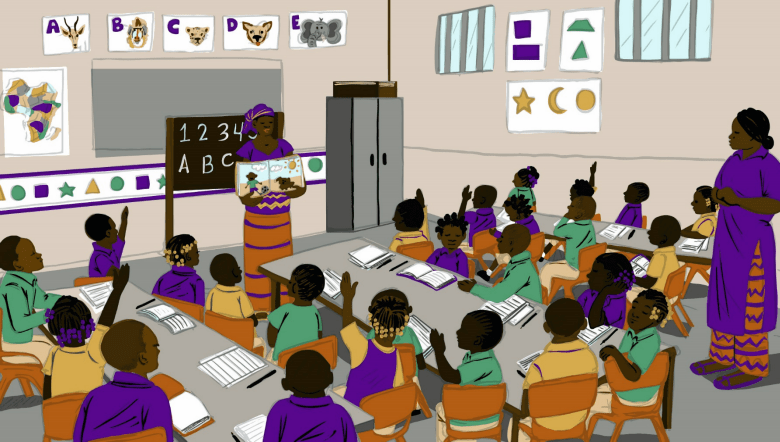
In centre based preschool programmes there is a focus on promoting a good mix of play and teacher directed instruction, this allows for good social and cognitive development for children [8]. These collaborative and supportive techniques are generally agreed by teachers to be effective, however the skills required to effectively incorporate play into education are lacking, meaning targeting this skill can enhance the quality of teaching practices [9].
Psychosocial stimulation programmes are interventions which aim to promote children’s cognitive development through the engagement between children and adults, typically through play. These interventions require high quality modelling of appropriate activates to parents or teachers, this can be achieved through live demonstrations from trained paraprofessionals which give ample opportunity for the parents and teachers to practice [10].
Implementing high quality programmes to scale
A major component of a high-quality intervention is the means to scale, therefore this must consider from the first steps of intervention development. The cost effectiveness of the intervention is an important consideration for scaling, this is due to the fact that the interventions which show highest quality are often expensive to implement. Therefore, finding a balance between quality and cost effectiveness is a vital consideration when distributing an intervention on a national level while maintaining high quality [11].
One factor of intervention design to consider when considering its scalability is the method of delivery, if an intervention can be effectively delivered in a group setting then overhead costs and time management will be more realistic at a large scale than if the intervention is delivered through personalised home visits or individual school visits [12].
One programme which has successfully implemented quality interventions while scaling is the Reach Up Programme mentioned previously, this was achieved by developing comprehensive training manuals which could be used to train more people to train home visitors, hence increasing the national reach of the intervention [13].

Conclusions
High quality early childhood education interventions, which are evidence based and realistic given the contexts of LMIC, are integral to good cognitive, physical, social and emotional development. High quality interventions should consider availability or resources, adopt a positive and fun ethos and effective teaching of the skills required to provide high quality education, this can be achieved through good modelling and ample opportunity to practice. Additionally, when designing interventions, the ability to scale should be considered from the beginning.
[1] McCoy, D. C., Salhi, C., Yoshikawa, H., Black, M., Britto, P., & Fink, G. (2018). Home- and center-based learning opportunities for preschoolers in low- and middle-income countries. Children and Youth Services Review, 88, 44-56. doi:10.1016/j.childyouth.2018.02.021
[2] Burger, K. (2010). How does early childhood care and education affect cognitive development? An international review of the effects of early interventions for children from different social backgrounds. Early Childhood Research Quarterly, 25(2), 140-165. doi:10.1016/j.ecresq.2009.11.001
[3] Ford, N. D., & Stein, A. D. (2015). Risk factors affecting child cognitive development: a summary of nutrition, environment, and maternal–child interaction indicators for sub-Saharan Africa. Journal of Developmental Origins of Health and Disease, 7(2), 197-217. doi:10.1017/s2040174415001427
[4] Pedersen, G. A., Smallegange, E., Coetzee, A., Hartog, K., Turner, J., Jordans, M. J., & Brown, F. L. (2019). A Systematic Review of the Evidence for Family and Parenting Interventions in Low- and Middle-Income Countries: Child and Youth Mental Health Outcomes. Journal of Child and Family Studies, 28(8), 2036-2055. doi:10.1007/s10826-019-01399-4
[5] Chaparro, J. C., Sojourner, A. J., & Huey, N. (2019). Differential Effects of High-Quality Early Care: Lessons from the Infant Health and Development Program. Sustaining Early Childhood Learning Gains, 287-302. doi:10.1017/9781108349352.014
[6] Morawska, A., & Sanders, M. (2006). A review of parental engagement in parenting interventions and strategies to promote it. Journal of Children’s Services, 1(1), 29-40. doi:10.1108/17466660200600004
[7] Smith, J. A., Baker-Henningham, H., Brentani, A., Mugweni, R., & Walker, S. P. (2018). Implementation of Reach Up early childhood parenting program: acceptability, appropriateness, and feasibility in Brazil and Zimbabwe. Annals of the New York Academy of Sciences, 1419(1), 120-140. doi:10.1111/nyas.13678
[8] Aboud, F. E. (2006). Evaluation of an early childhood preschool program in rural Bangladesh. Early Childhood Research Quarterly, 21(1), 46-60. doi:10.1016/j.ecresq.2006.01.008
[9] Puteh, S. N., & Ali, A. (2013). Teachers’ perceptions towards play-based approach in language and literacy development at preschool. Malaysian Journal of Learning and Instruction, 10, 79-98. Retrieved from ISSN-1675-8110
[10] UNICEF. (2015). A systematic review of parenting programmes for young children in low and middle income countries.
[11] Wiseman, V., Mitton, C., Doyle-Waters, M. M., Drake, T., Conteh, L., Newall, A. T., … Jan, S. (2016). Using Economic Evidence to Set Healthcare Priorities in Low-Income and Lower-Middle-Income Countries: A Systematic Review of Methodological Frameworks. Health Economics, 25, 140-161. doi:10.1002/hec.3299
[12] Luoto, J. E., Lopez Garcia, I., Aboud, F. E., Fernald, L. C., & Singla, D. R. (2019). Testing means to scale early childhood development interventions in rural Kenya: the Msingi Bora cluster randomized controlled trial study design and protocol. BMC Public Health, 19(1). doi:10.1186/s12889-019-6584-9
[13] Walker, S. P., Chang, s. M., Smith, J. A., & Baker-Henningham, H. (2018). The Reach Up Early Childhood Parenting Program Origins, Content, and Implementation. ZERO TO THREE, 38(4), 37-44.
 Flora's Global Early Childhood Blog
This topic is written very well and used a good source of information. I agreed with you that early childhood development is important ambition in low and middle income countries like Afghanistan, Yemen, and other countries around the world. With the low quality early childhood education (ECE) impact children development and they struggle in their later educational career as well. As you mentioned many good aspects of quality ECE, I will add one as quality in early childhood education can improve quality of life and living standards as well especially in countries like they are struggle in social and economic development. With high quality education in ECE can develop their generation who can server better to their country and community as well.
I also agreed with you that mix of play and teacher directed instructions can help to grow social and cognitive abilities among children. This will also help to improve teacher’s curriculum as well so the new teaching methods need to be improved. Psychosocial simulation programmes are very interesting and that would make a difference. This will allow to increase the interest among children and also teachers will demonstrate their professional skills. I am also agreed that both parent training and centre based programmes can share a selection of traits which will also increase the interest of deep involvement from both parents and their children and achieve high quality educational infrastructure. Finally, the recommendations and interventions are fully supporting the purpose and will improve the quality education in LMIC.
LikeLike