The Poverty Cycle
10% of the world’s population live in poverty. Moreover, due to the population pyramid 20% of children live in poverty. Due to this the first sustainable development goal set out by the UN is to end worldwide poverty [1].
Poverty is a self-perpetuating issue which is maintained by children of poverty not having access to the tools and opportunities necessary to physically and economically develop to a higher standard than their parents [2]. This concept is known as the inter-generational poverty cycle.
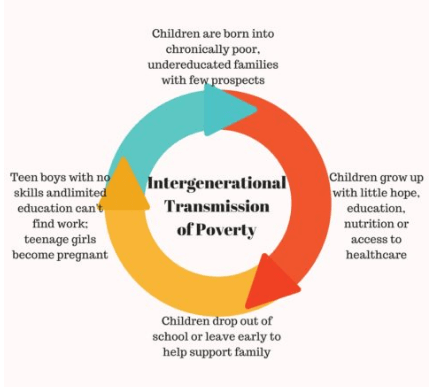
Children in low-to-middle income countries who are born into poverty experience poor sanitation, food insecurity, poor health, lack of responsive care and reduced access to good quality education. This combination of factors results in poor cognitive, socio-economic and physical development which results in poor academic achievement. This leads to reduced chances of acquiring well paid work and the ability to provide better for their future children [4].
Early Childhood Interventions
During early childhood, brain development is rapid and especially sensitive to environmental influences [5]. Therefore, exposure to harsh living conditions due to poverty at this age limit the children’s potential in later life on a biological level [6].
Early childhood interventions can target children and their families at this vital stage and aim to help promote healthy development which can, in turn, provide the building blocks to achieve better in later childhood and adulthood.
There are a few broad areas in which early childhood interventions can be used to target children’s wellbeing and break the poverty cycle [7] :
Programmes to target health and nutrition
Government lead changes to improve disease prevention, sanitation and access to food for low income families.
Programmes to improve maternal wellbeing
Improvement of mother’s mental and physical health to promote better quality of childcare and prenatal health for healthy childbirth.
Parenting programmes to promote responsive caregiving and develop early learning
Home visits to teach caregivers how to promote children’s exploration and learning with toys and books.
Centre based interventions
Programmes to improve the quality of schools and teaching
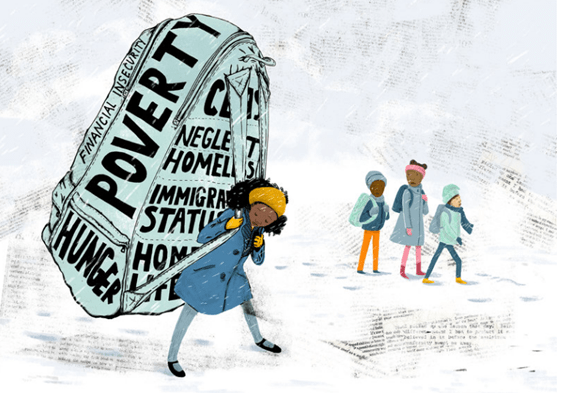
The aim of all of these interventions is to raise the child’s potential to function healthily and therefore achieve well academically and socially. The intent is that they may develop a career which earns a comfortable living wage and they are educated well enough to make safe choices and live a happy life. Therefore, reducing the chance of poverty in future generations. A successful distribution of early childhood interventions in low to middle income countries globally could break the transmission of poverty to future generations and therefore tackle the first UN sustainable development goal.
The knock-on effects
Early childhood interventions in low- and middle-income countries would not simply affect the levels of poverty. There are other effects which would influence a number of the other UN sustainable development goals. For example;
Goal 3. Ensure healthy lives and promote wellbeing for all ages
- The interventions highlighted above focus on improving physical, social and emotional wellbeing of children and their families.
- Interventions which involve home visits to low income families such as the Reach up programme uses paraprofessionals to train parents how to have positive interactions with their children and promote play and exploration [9]. Due to the extensive benefits of play in early childhood on cognitive development [10] this can promote academic achievement and escape from poverty. But aside from that the positive child parent interactions created through joint play can have great impacts on both the child and parent’s wellbeing. These positive interactions between child and parent help build life-long security and subjective wellbeing [11].
Goal 4. Ensure inclusive and equitable quality education and promote lifelong learning opportunities
- This goal closely ties in with the action required to break the poverty cycle; interventions which improve children’s cognitive ability and centre based interventions to improve schooling quality aim to promote higher academic achievement and career prospects for children from low income families.
Goal 5. Achieve gender equality and empower all women and girls
- Some low-income country’s cultures tend towards poor child outcomes being blamed on mothers. By implementing interventions which teach mothers how to aid their child’s development this can be overcome, and mothers can feel empowered.
- Furthermore, many interventions employ members of the community as paraprofessionals to train as home visitors; in doing so women are able to develop a career and work. By creating these jobs, women’s role in communities can be enhanced, this can help work towards gender equality.
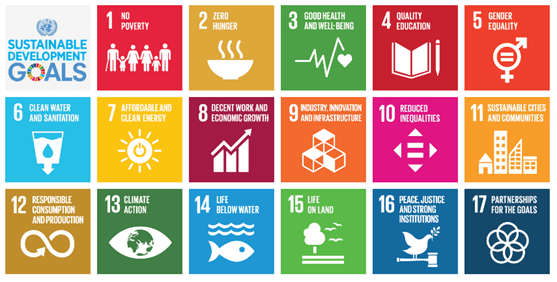
These are just a few examples of how early childhood interventions can benefit low to middle income countries and target the sustainable development goals, but there are many more
REFERENCES
[1] UN. (2018, May 17). Goal 1: End poverty in all its forms everywhere. Retrieved from https://www.un.org/sustainabledevelopment/poverty/
[2] Payne, R. (2005). A framework for understanding poverty (4th edition). Highland, TX.
[3] NICA. (2016, November 11). About Us. Retrieved from https://nica.works/about-us/
[4] Bird, K. (2013). The Intergenerational Transmission of Poverty: An Overview. Chronic Poverty, 60-84. doi:10.1057/9781137316707_4
[5] Carey, W. B. (2001). From Neurons to Neighborhoods: The Science of Early Childhood Development. Journal of Developmental & Behavioral Pediatrics, 22(2), 144-145. doi:10.1097/00004703-200104000-00011
[6] Blair, C., & Raver, C. C. (2016). Poverty, Stress, and Brain Development: New Directions for Prevention and Intervention. Academic Pediatrics, 16(3), S30-S36. doi:10.1016/j.acap.2016.01.010
[7] Black, M. M., Walker, S. P., Fernald, L. H., Andersen, C. T., DiGirolamo, A. M., Lu, C., … Grantham-McGregor, S. (2016). Advancing Early Childhood Development: from Science to Scale 1; Early childhood development coming of age: science through the life course. Lancet, 389(10064), 77-90. doi:10.1016/S0140-6736(16)31389-7
[8] Johnson, L. A., & NPR. (2019). [Digital Painting]. Retrieved from https://www.npr.org/sections/ed/2016/01/07/461595631/how-to-help-kids-in-poverty-adjust-to-the-stability-of-school-after-break?t=1581599883807
[9] Smith, J. A., Baker-Henningham, H., Brentani, A., Mugweni, R., & Walker, S. P. (2018). Implementation of Reach Up early childhood parenting program: acceptability, appropriateness, and feasibility in Brazil and Zimbabwe. Annals of the New York Academy of Sciences, 1419(1), 120-140. doi:10.1111/nyas.13678
[10] Pellegrini, A. D., & Jones, I. (1994). Play, toys, and language. Toys, Play, and Child Development, 27-45. doi:10.1017/cbo9780511527616.003
[11] Singla, D. R., Kumbakumba, E., & Aboud, F. E. (2015). Effects of a parenting intervention to address maternal psychological wellbeing and child development and growth in rural Uganda: a community-based, cluster-randomised trial. The Lancet Global Health, 3(8), e458-e469. doi:10.1016/s2214-109x(15)00099-6
[12] UN. (2018). Sustainable Development Goals [Infographic]. Retrieved from https://www.un.org/sustainabledevelopment/news/communications-material/
 Flora's Global Early Childhood Blog